Knowing your break-even point helps you set sales goals, price with confidence, and see how new costs affect your business before you commit to them. If you’d like help running the numbers, Sparkline Solutions works as a fractional CFO in Mesa, AZ, helping owners calculate break-even and use it to plan.
How Do I Calculate a Break-Even Point?
A simple way to estimate it:
Break-even revenue = Fixed costs ÷ Gross margin percentage
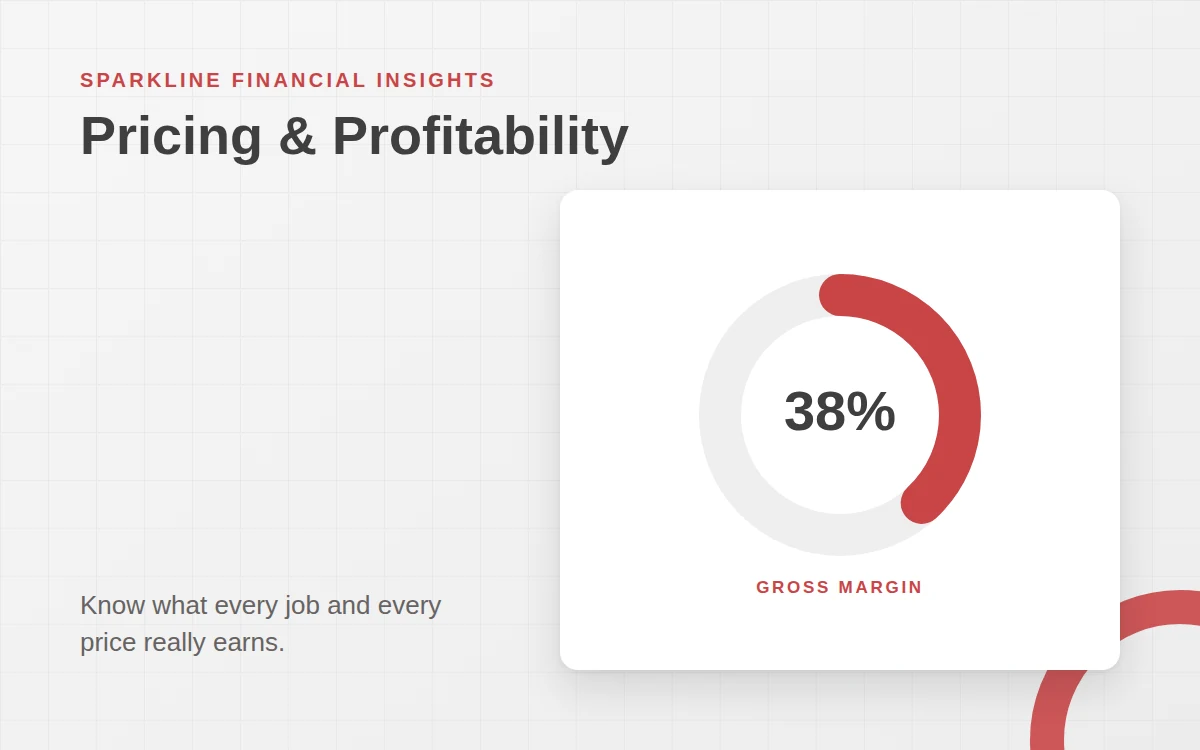
Here’s what that means in plain English. Your gross margin is the share of each sales dollar left after direct costs, like materials or job labor. That leftover amount is what pays for rent, salaries, and everything else. Break-even is simply the sales level where those leftovers add up to your fixed costs.
A quick hypothetical: if each dollar of sales leaves you forty cents after direct costs, you need two and a half dollars of sales for every dollar of fixed costs. Plug in your own monthly numbers and you’ll have a clear target.
To get a reliable answer, you need two things from your books: an accurate total of your fixed costs and a gross margin based on real, well-categorized numbers.
What Are Fixed and Variable Costs?
Separating these two is what makes break-even analysis work.
- Fixed costs stay about the same regardless of sales. Think rent, office salaries, insurance, software subscriptions, and loan interest.
- Variable costs rise and fall with sales. Think materials, direct labor, shipping, and merchant fees.
Some costs are a mix. A phone plan might have a flat base plus usage charges, and a part-time employee’s hours might flex with demand. For planning purposes, make a reasonable call and be consistent. Your bookkeeper can help by organizing your chart of accounts so direct costs and overhead land in separate categories.
Why Does Break-Even Matter?
Break-even analysis turns vague goals like “sell more” into specific targets. It helps you answer questions like:
- How much do we need to sell each month?
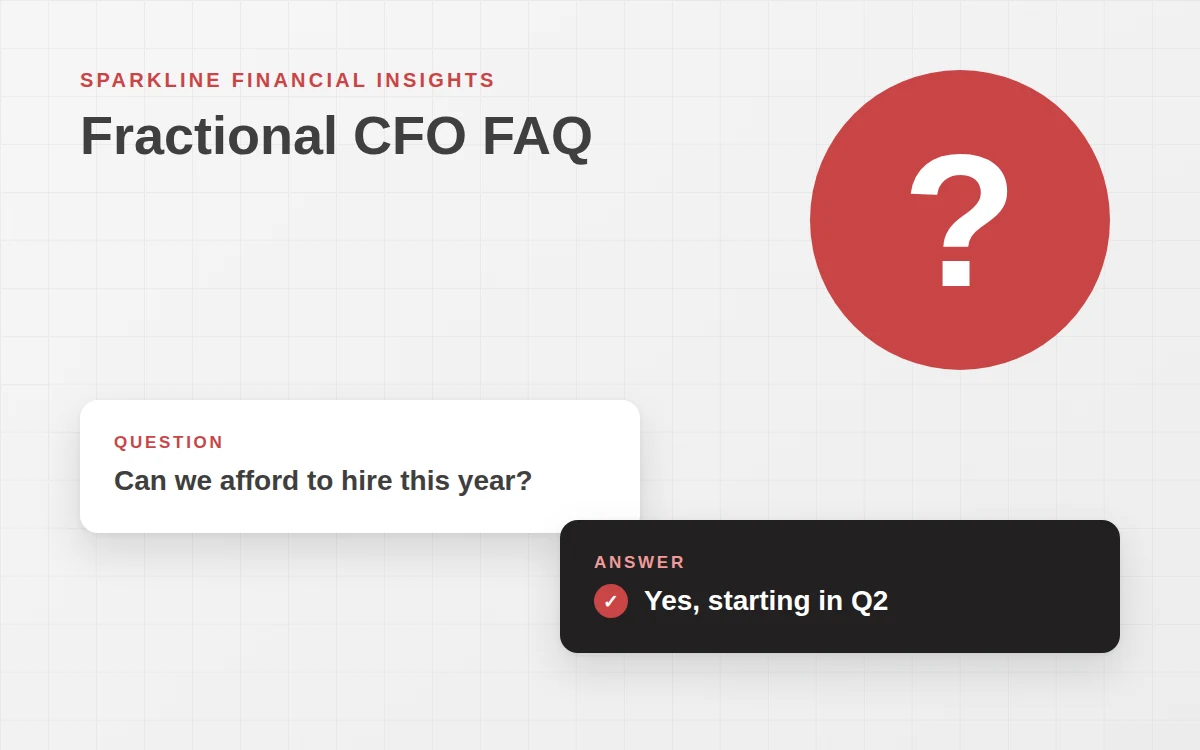
- Can we afford a new hire?
- What happens if we raise or lower prices?
- How much does a slow month really cost us?
It also gives you a calmer way to look at your business. When you know your break-even number, a slow week stops being a vague worry and becomes a simple question: are we still on track to cover our costs this month?
How Do New Expenses Change Break-Even?
Every new fixed cost raises your break-even point. A new salary, a bigger lease, or a new software subscription all mean you need more sales just to stay even.
The same formula tells you how much more. Divide the new monthly cost by your gross margin percentage, and you’ll see the extra revenue you’d need to cover it. Seeing that number before you commit makes decisions much clearer.
Price and margin changes work too. Raising prices or lowering direct costs improves your gross margin, which lowers your break-even point. Discounting does the opposite, so it’s worth checking the math before a big sale.
How Can a Fractional CFO Help?
A fractional CFO in Mesa can calculate your break-even point accurately, model how decisions change it, and track your progress each month. That might include:
- Building break-even into your monthly reports.
- Modeling a new hire, price change, or lease before you sign.
- Calculating break-even by service line or location.
- Watching margins so your target stays realistic.
Combined with accurate bookkeeping, you’ll know where you stand each month. For the margin side of the formula, see What Is Gross Margin and Why Does It Matter?
Frequently Asked Questions
Should I calculate break-even monthly or yearly?
Both can help. Monthly break-even is useful for day-to-day planning, and yearly helps with annual goals and budgets.
Does break-even include my pay?
It should. If you don’t include a reasonable owner salary, your break-even point will look lower than it really is, and you may think you’re doing better than you are.
What if my costs change often?
Recalculate regularly. Break-even is a planning tool, not a fixed number, so update it when rent, payroll, or pricing changes.
Can break-even help with pricing?
Yes. It shows how price changes affect the sales volume you need to stay profitable, which makes pricing decisions less of a guess.
Is break-even the same as being profitable?
No. Break-even is the point where you’re not losing money. Profit is everything above that line, so the goal is to clear it comfortably each month.
Related Questions
- What Is Gross Margin and Why Does It Matter?
- What Is a Cash Flow Forecast?
- What Does a Fractional CFO Do?
Looking for a Fractional CFO in Mesa, AZ?
Your break-even point is one of the simplest and most useful numbers in your business. Working with a fractional CFO in Mesa means you’ll know it, understand what drives it, and see how every decision moves it.
If you’re not sure how much you need to sell to stay profitable, reach out to Rob Jamieson at Sparkline Solutions. He’ll calculate your break-even point and show you how every decision affects it.