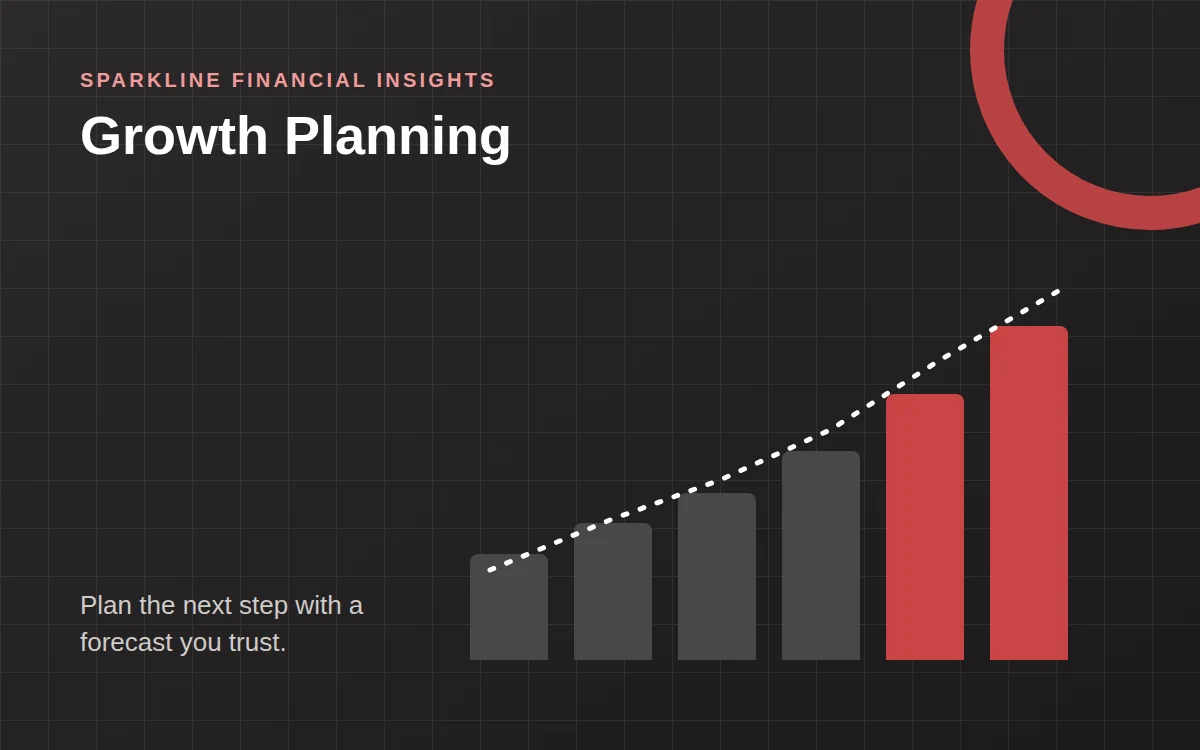
Instead of a plan that goes stale by spring, you always have a fresh view of the year ahead. Sparkline Solutions works as a fractional CFO in Mesa, AZ, building and updating rolling forecasts with owners so their plans keep up with their business.
How Is a Rolling Forecast Different From a Budget?
A budget is typically set once a year and stays fixed. It’s your target: what you planned to earn and spend.
A rolling forecast changes as your business changes. It’s your current best estimate of what will actually happen, based on what you know today.
Here’s how that plays out. Say you budgeted for a steady year, but a large client signs on in spring. Your budget still shows the old plan. Your rolling forecast updates to include the new work, the extra labor, and the cash timing, so you can plan hiring and purchases around reality.
Many businesses use both: the budget as the target, and the forecast as the current best estimate.
Why Use a Rolling Forecast?
Rolling forecasts help you:
- React quickly to changes in sales or costs. You see the impact before it hits your bank account.
- See problems and opportunities earlier. A slow quarter ahead shows up months in advance.
- Plan hiring and investments with current data. Decisions rest on today’s numbers, not last year’s guesses.
- Avoid relying on outdated assumptions. Your plan stays connected to what’s actually happening.
For small businesses, where one customer or one cost change can shift the whole year, that flexibility matters.
What Goes Into a Rolling Forecast?
A typical forecast includes, for each future month:
- Revenue.
- Cost of goods sold.
- Operating expenses.
- Profit.
- Cash flow.
It’s built from actual results plus updated assumptions. Those assumptions might include expected new clients, planned price changes, seasonal patterns, hiring plans, or large purchases. Writing your assumptions down makes it easier to see which ones were right and adjust the ones that weren’t.
How Often Should It Be Updated?
Monthly is most common for small businesses, right after the books are closed. That way, each update starts from accurate actual numbers rather than estimates. See What Is a Month-End Close?
The update itself follows a simple rhythm: drop in last month’s actual results, compare them to what you forecast, adjust your assumptions, and add a new month at the end.
If something big changes in the middle of a month, like losing a major customer or taking on a loan, it’s fine to update the forecast right away rather than waiting.
How Can a Fractional CFO Help?
A fractional CFO can build a rolling forecast, update it with you each month, and help you use it to make decisions. That last part is the real value: turning the numbers into choices about hiring, pricing, spending, and cash.
A fractional CFO in Mesa also helps you ask better questions each month. Why did revenue land where it did? Which assumption needs to change? Accurate bookkeeping provides the actual results the forecast relies on.
Frequently Asked Questions
How far ahead should a rolling forecast go?
Twelve months is common. Some businesses also keep a shorter weekly cash forecast to manage the next few months in more detail.
Is a rolling forecast hard to maintain?
With a good template and current books, monthly updates usually don’t take long. The first version takes the most work, and updates get easier from there.
Do I still need a budget?
A budget gives you a target to measure against. Many businesses benefit from having both, using the forecast to see whether they’re on track to hit the budget.
Is a rolling forecast only for large companies?
No. Small businesses often benefit even more, because they tend to face faster changes and have less room for surprises.
What if my forecast is wrong?
It will be, at least a little, and that’s fine. The goal isn’t perfect predictions. It’s learning from the differences each month and making better decisions sooner.
Related Questions
- What Is a Month-End Close?
- What Is a Cash Flow Forecast?
- How Do Seasonal Businesses Manage Cash Flow?
Looking for a Fractional CFO in Mesa, AZ?
A rolling forecast keeps your plan useful all year, so you can spot changes early and make decisions with current numbers. A fractional CFO in Mesa can set it up and keep it running with you.
If your plans are always out of date by March, reach out to Rob Jamieson at Sparkline Solutions. He’ll set up a rolling forecast that keeps your business plan current all year.